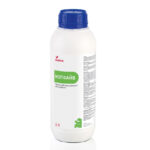
Description

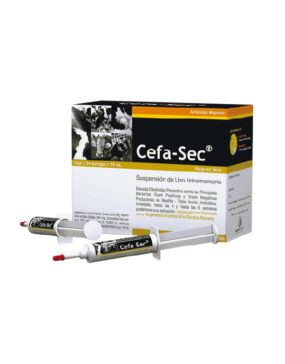
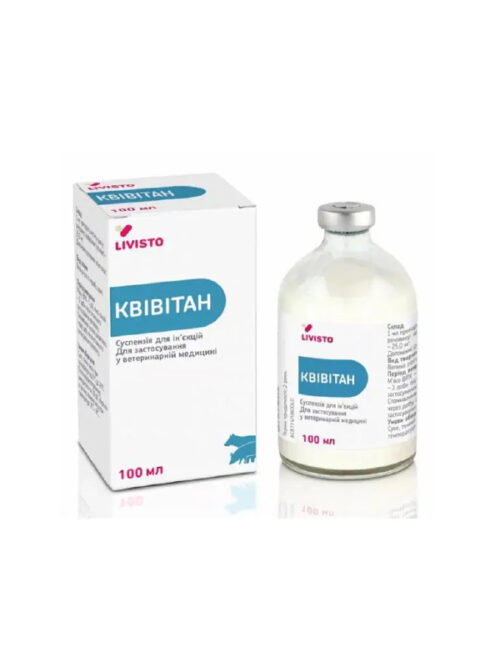
Cefquinome — suspension for injection

IMPRESSIVE SUSPENSION — MILD RESUSPENSION

•Tsefquinome

−Higher resistance to β-lactamases.
−High permeability to cells.
−High activity against S.aureus, Streptococcus spp,,E.coli, Salmonella, Pasteurella,Klebsiella pneumoniae.

Mild resuspension

−Protects veterinarian time and effort.
−Guarantees accurate dosing

Composition

1 ml of the medicine contains: the active substance cefquinome (sulfate) — 25.0 mg.

Appointment

Cefquinome — is a modern 4th generation cephalosporin with a wide spectrum of antibacterial action. Active against Gram-positive (Streptococcus spp., Staphylococcus spp.) and Gram-negative bacteria (Pasteu-rella multocida, Mannheimiahaemolytica, Escherichia coli,Bacteroides spp., Fusobactere-rium spp., Haemophilus pa-rasuis, Actinobacillus pleurop-neumoniae).

The mechanism of its action consists in inhibiting the synthesis of the bacterial wall. The drug is resistant to the action of betalactamases (including penicillinase).After intemuscular administration of the drug at a dose of 1 mg cefquinome per 1 kg of animal body weight, the concentration of cefquinome in bovine serum after 1.5–2 hours is 2 mg/ml.
Cefquinome has a relatively short half-life (2.5 hours).When the drug is administered intramuscularly at a dose of 2 mg per 1 kg of body weight, the maximum concentration of cefquinome in the blood serum of pigs and piglets after 15–60 minutes is approximately 5 mg/ml. The half-life of cefquinome for this animal species is 9 hours. It is excreted from the body mainly with urine.

Dosage and method of administration

  • Cattle (adults and juveniles)— treatment of animals suffering from panaritium, ungulate ulcer, purulent pododermatitis, interdigital necrobacillosis, mastitis, septicemia, as well as respiratory diseases caused by microorganisms sensitive to cefquinome.
  • Pigs (adults and young) —treatment of animals suffering from MMA syndrome (mastitis-metritis-agalactia), arthritis, meningitis, epidermitis, as well as respiratory diseases caused by microorganisms sensitive to cefquinome. Temporary swelling is possible at the site of drug administrationwhich disappears within 15 days after the last use of the drug. When using the drug, generally accepted and local principles regarding the use of antimicrobial drugs should be taken into account. The use of the drug should be based on testing the sensitivity of microorganisms to the active substance. Inappropriate use of the drug in farms where microorganisms are resistant to cefquinome.
  • Before use, the bottle with the drug must be thoroughly shaken.
  • Use sterile syringes and needles for administration.
  • There is no information on the negative effects on cattle or pigs during pregnancy and lactation. Studies in laboratory animals have not found a negative effect of the drug when used during pregnancy or lactation, including a teratogenic effect. The expediency of using this drug is determined by the doctor of veterinary medicine, taking into account all the advantages and risks. It is not recommended to use simultaneously with drugs that have a bacteriostatic effect.

The drug is administered intramuscularly in doses:

  • cattle— 1 mg of cefquinome per 1 kg of animal body weight or 2 ml of the drug per 50 kg of body weight once a day for 3–5 days (with mastitis, the course of treatment is 2 days);
  • calves under 6 months of age—2 mg cefquinome per 1 kg of animal body weight or 4 ml of the drug per 50 kg of body weight once a day for 3–5 days;
  • pigs— 2 mg of cefquinome per 1 kg of animal body weight or 2 ml of the drug per 25 kg of body weight once a day for 3 days (with MMA syndrome, the course of treatment is 2 days); piglets after weaning—2 mg of cefquinome per 1 kg of animal body weight or 2 ml of the drug per 25 kg of body weight once a day for 5 days.

Before use, the bottle with the drug must be thoroughly shaken. The vial cap can be safely pierced 50 times.

Overdose

Doses of 20 mg cefquinome/kg/day in cattle and 10 mg cefquinome/kg/day in pigs and piglets are well tolerated.

Contraindications

Hypersensitivity to cephalosporins and β-lactam antibiotics, as well as to excipients.
Do not use in animals weighing less than 1.25 kg.

Reservation

Personnel working with the drug must comply with the basic rules of hygiene and safety adopted when working with veterinary drugs.
In case of contact of the drug with the eyes or skin, they should be washed with water.
If any allergic reactions occur, you should immediately seek medical help with the instructions for the drug.
Use only a disposable syringe. After use, the disposable syringe must be discarded.

Withdrawal period (carencia)

Slaughter of the animal for meat is allowed after 5 days (cattle) and 3 days (pigs) after the last use of the drug.
Milk consumption is allowed a day after the last use of the drug.

Storage

A dark place inaccessible to children at temperatures from 15°С to 25°С.

Shelf life

Shelf life 2 years.
After the first selection from the bottle, the drug must be used within 28 days, under the conditions of storage in a dry, dark place at a temperature from 2°С to 8°С.

Release form

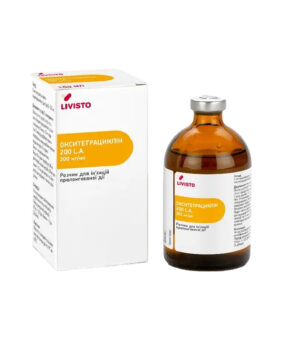
Type II glass vials closed with 100 ml rubber stoppers for aluminum running-in.

Reviews

There are no reviews yet.


Be the first to review “QUIVITAN”