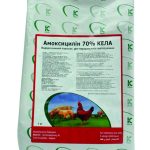
- Description
Description
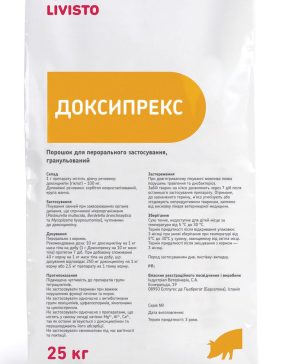
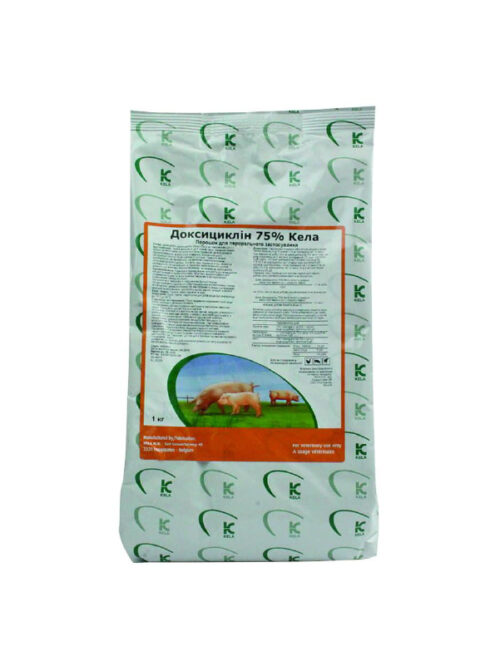
Doxycycline 75%
Powder for oral use
-
- Cows
- Pigs
- Poultry
Composition
1 g of the medicine contains the active substance: doxycycline (doxycycline hyclate) — 750.0 mg. Excipient: lactose monohydrate.
Indications for use
Calves aged 4 to 8 weeks, pigs: treatment of animals suffering from septicemia, as well as respiratory diseases (bronchopneumonia, enzootic pneumonia, atrophic rhinitis, pasteurellosis and others) and urinary system, digestive tract (colibacillosis, salmonellosis) caused by microorganisms sensitive to doxycycline. Chickens, broiler chickens: treatment of poultry suffering from colibacillosis, salmonellosis, as well as respiratory diseases caused by microorganisms sensitive to doxycycline.
Pharmacological properties
ATC vet classification code QJO1 — antibacterial veterinary drugs for systemic use. Q301 AA02 — Doxycycline. Doxycycline — is a second-generation tetracycline antibiotic. Bacteriostatic antibiotic with a wide spectrum of action. The drug has a wide spectrum of action against gram-positive and gram-negative bacteria (Staphylococcus spp., Streptococcus spp., Dipiococcus spp., Corynebacterium spp., Erysipelothrix spp., Haemophylus spp., Pasteurella spp.r Clostridium spp., KZebsiella spp., Actinobacillus pleuropneumoniae, Bordetella bronchiseptica, E. coli, Salmopella spp.). It is also effective against chlamydia (Chlamydza spp.), mycoplasma (Mycoplasma spp.) and rickettsia (Rickettsia spp.). The mechanism of action of the substance is related to the delay in protein synthesis. Doxycycline blocks the attachment of aminoacyl tRNA to the acceptor site, which inhibits the attachment of new amino acids to the peptide chain and thus inhibits protein synthesis. After oral administration, doxycycline is absorbed from the digestive tract by 93–100% and quickly distributed throughout the body. A dose of 200 mg on the first day followed by 100 mg provides a serum concentration at a therapeutic level of — 3 μg/ml. An important point in the treatment regimen is the maintenance of an initial minimum therapeutic serum concentration of 0.8 µg/ml, which is achieved after the first administration of the drug. Half of the applied dose is adsorbed in 50 minutes. The maximum concentration in the blood is detected after 2–4 hours, and the rest of the concentration is maintained for 18–24 hours. Doxycycline is excreted from the body, both in the form of metabolites and unchanged. Feeds do not affect the ability of doxycycline to adsorb and do not reduce the minimum serum concentration level (0.8 µgiml). It is excreted from the body with feces.
Dosage
Orally with food or drinking water in doses: calves aged 4 to 8 weeks — 14 mg of the drug per 1 kg of animal body weight per day (10.5 mg of doxycycline per 1 kg of body weight), this dose is divided into
2 parts with an interval of 12 hours for 3 days, Pigs
— 10-14 mg formulation per 1 kg body weight per day (7.5-10.5 mg doxycycline per 1 kg body weight) for 5 days; Chickens, broiler chickens —14 mg formulation per 1 kg body weight per day (10.5 mg doxycycline per 1 kg body weight) with drinking water for 3-5 days.
In the event that group therapy is carried out for animals, the daily dose of the drug is calculated according to the formula:
(A * B * C) /1000 = g per l
A — Doxycycline dose 75% Cala (mg/kg)
In — is the average body weight of the animal (kg)
C — number of animals
For 1000 liters of drinking water, the daily dose is calculated according to the formula:
(A * B * C) /D = g per l
A — Doxycycline dose 75% Cala (mg/kg)
In — is the average body weight of the animal (kg)
C — number of animals
D — total daily water quantity
The determined dose is first mixed with a small amount of water, bringing to a homogeneous state. Then the daily rate of drinking water is added to this mixture. After dissolving the drug in drinking water, such a solution must be used within 24 hours.
Contraindications
Increased individual sensitivity to tetracyclines. Do not use in chickens— laying hens, the eggs of which are used for human consumption, as well as in ruminants with functionally developed pre-stomachs. Do not prescribe to animals with impaired liver function. Do not use simultaneously with bactericidal antibiotics such as penicillins and cephalosporins. Do not use together with antacids, kaolin and substances containing iron, magnesium, calcium and aluminum.
Overdose
With an overdose of the drug, dysbacteriosis, digestive disorders, disorders of the cardiovascular system may occur in animals. If allergic reactions occur, animals should stop treatment with the drug and use antihistamines and corticosteroids.
Interaction with other means
Preparations containing metal ions (anthracides, preparations containing iron, magnesium, calcium) form inactive chelates with doxycycline, which is why it is necessary to avoid their simultaneous appointment. Concomitant use with penicillins, cephalosporins, which act bactericidally and are antagonists of bacteriostatic antibiotics, is undesirable.
Withdrawal period
Slaughter of animals and poultry for meat is allowed after 5 days (poultry, pigs) and 14 days (calves) after the last use of the drug. The meat obtained, by the specified deadline, is disposed of or fed to non-productive animals, depending on the opinion of the veterinary medicine doctor.
Side effect
Dysbacteriosis and digestive disorders may occur in animals. In young animals, the drug can cause a change in the color of bones and teeth to yellow, brown or gray. Large doses and long-term use can delay bone growth.
Special precautions for use
Before starting treatment, it is recommended to identify the causative agent and conduct appropriate bacteriological tests to determine the individual sensitivity of microorganisms to doxycycline.
Shelf life
4 years. After opening, use the drug within 28 days. Shelf life after dilution in drinking water — 24 hours. A dry, dark place inaccessible to children at a temperature of 15 °C to 30 °C.
Packaging
Laminated aluminium bags of 1 and 7.5 kg.
Special warnings
Personnel working with the drug should use special protection (gloves, respirator) to avoid direct contact with the skin and prevent inhalation of the drug.